Open Science Festival 2025

Celebrating open science: key moments and photos from Groningen 2025.

The festival opened with a word of welcome from Casper Albers, dean of the Faculty of Behavioural and Social Sciences at the University of Groningen and co-chair of this year's programme committee. He highlighted the need for greater autonomy in research and reducing the influence of for-profit publishing. He was followed by Wiro Niessen, dean of UMCG, and a keynote by Ana Persic, head of open science at UNESCO, who shared a global perspective on the uptake of open science and the challenges it faces in a shifting geopolitical landscape.

Panels, posters, prizes, and more 

Throughout the day, participants engaged in practical workshops, explored posters, and visited information booths showcasing a wide variety of projects and services. 

During the plenary sessions, panels chaired by Hans de Jonge, director of Open Science NL, and Ana Ranitovic, chief of open science at the University of Groningen and co-chair of the programme committee, explored the impact of open science projects, the challenges of running them, and how open science can increase resilience in times of crisis. The discussions emphasised the importance of collaboration, communication, and engaging the public to (re)gain trust in science.

During the closing, three posters were awarded prizes after a vote by visitors

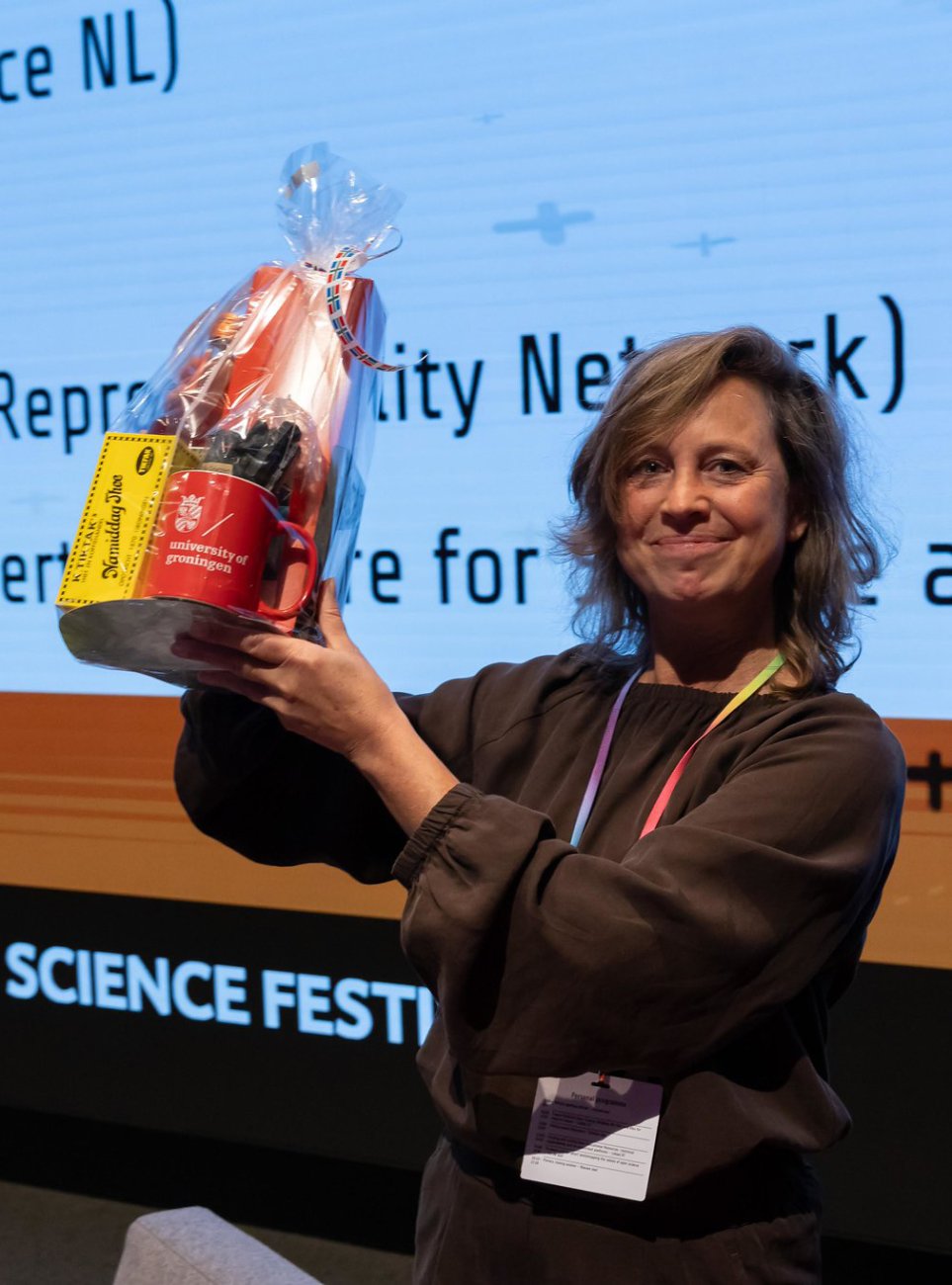
Astrid van Wesenbeeck, 

National Library of the Netherlands

Readers of your paper in society

Astrid van Wesenbeeck’s poster focused on WijsNL, an initiative by the KB to improve the accessibility of open access research for so-called new users of scholarly research. These are readers outside academia, such as teachers, healthcare professionals, journalists, policymakers, and citizen scientists. While open access removes paywalls, she highlighted that understandability remains a major barrier. By engaging researchers at the festival, her team sought input on how to make scholarly papers more approachable. ‘Imagine what it will be like if citizens of all kinds can access scholarly research in a way that fits their needs,’ she explains. ‘For some the open access paper will be enough but for many folks, an extra effort is desirable. Think about a layman’s abstract, the possibility to get in contact with the author, or related publications about the research that have been written for non-academics.’

Photographer: Pjotr Wiese Astrid van Wesenbeeck with her present

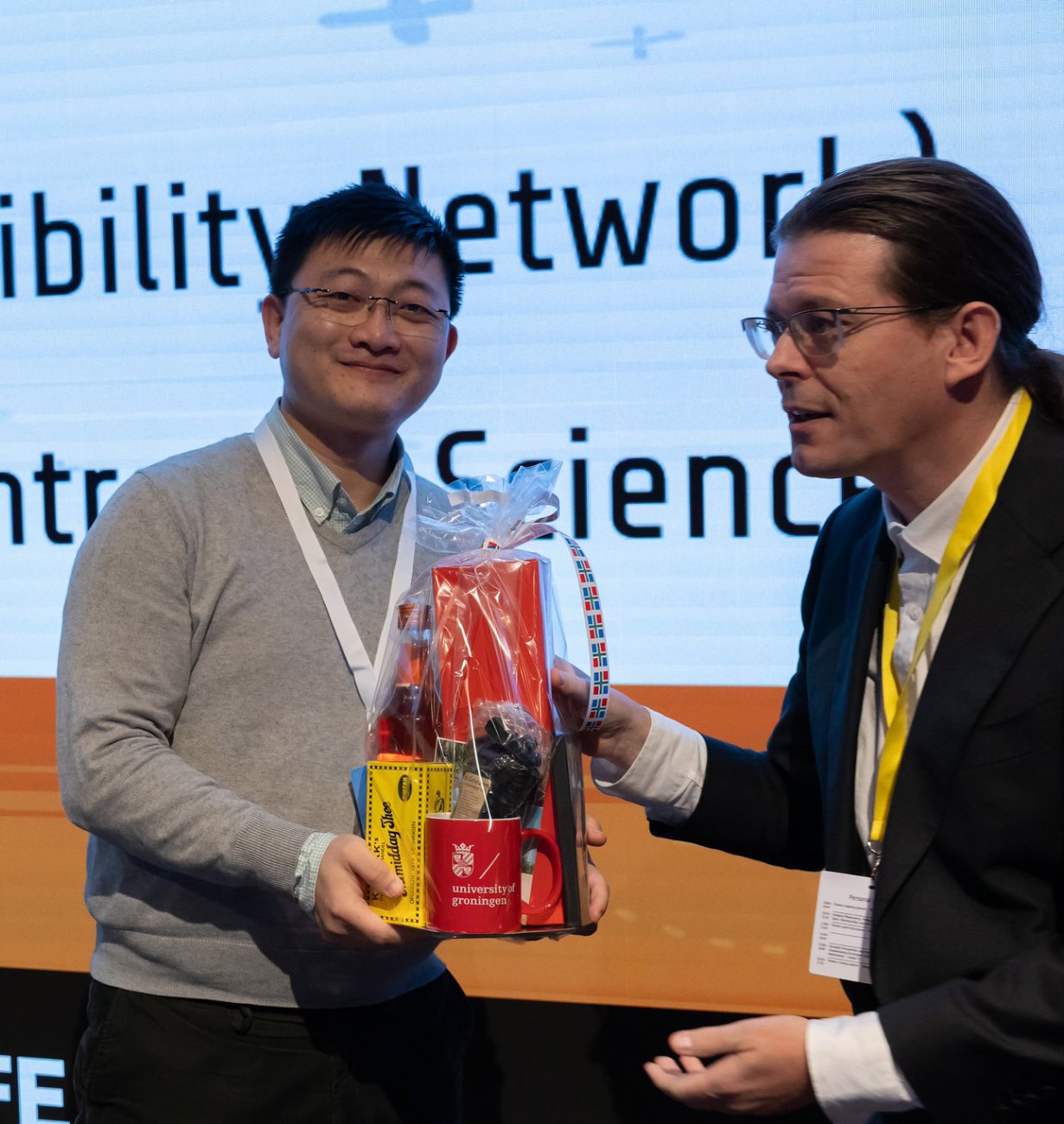
Shuai Wang, 

Maastricht University

Designing Data Infrastructure Maturity Profiles

Shuai’s poster introduces a new framework for documenting implementation decisions related to resource use and service selection, offering a structured approach for comparing data infrastructures and monitoring their development. In addition, this initiative included two use cases, drawn from current projects at Maastricht University: PURE3D, a major data infrastructure, and UM's University Library Digital Collections Portal. Together, these use cases illustrate the versatility and potential of the DIMP framework in supporting data infrastructures of varying purposes and characteristics. 

With the poster, Shuai wanted to get feedback about the innovative framework. ‘We hope that people think of DIMP for data infrastructures as DMP for datasets, and SMP for software.’ He admits he was surprised to win the ‘most innovative’ award because there were not many data infrastructure developers or managers in the audience, but happily received the recognition during the closing ceremony.

View Shuai's poster on Zenodo

Photographer: Pjotr Wiese Shuai Wang receives his present

Tanya Lee, 

Leiden University

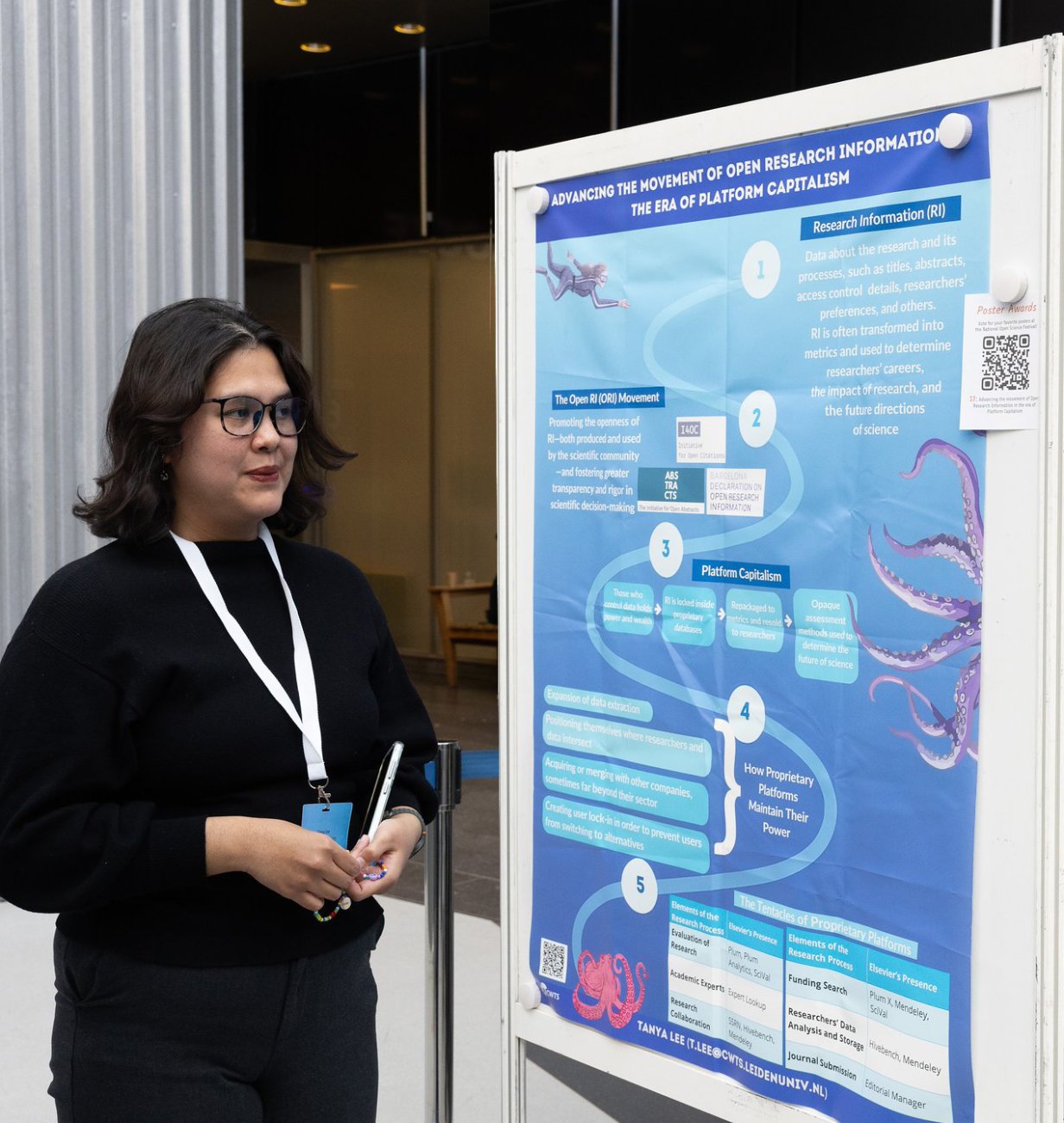
Advancing the movement of Open Research Information in the era of Platform Capitalism

Tanya Lee’s poster features a deep sea diver’s journey into open science, navigating dangers like a dangerously tentacled octopus. The poster explores the tension between movements seeking to reform science, like the open research information movement, and the continued dominance of proprietary platforms throughout the research lifecycle, Tanya explains. She hopes that visitors have taken away the importance of research information in today’s era of platform capitalism. ‘Proprietary platforms benefit greatly from positioning themselves at the intersection where researchers and research information meet. The open science movement must go beyond openness and continue to advocate for responsible and inclusive uses of research information, particularly when used to assess researchers and their research.’

Asked why she thinks her poster design impressed voters she answers. ‘Posters are your chance to be bold and creative. This goes beyond summarising your ideas, papers, or your results. Do not hesitate to experiment with the design, the colours, and the layouts. Consider thinking of your poster as a story to be told. Creative metaphors, like a giant octopus lurking in the deep ocean, can draw people in and deliver your message more effectively.’

View Tanya's poster on Zenodo

Photographer: Pjotr Wiese Tanya Lee at the poster presentation

Also, the second Leo Waaijers Open Science Award was presented to Chris Hartgerink for their work on ResearchEquals. The rector of this year's host University of Groningen, Jacquelien Scherpen, closed the festival.

Video registration

Plenary sessions

In pictures

A selection of the photos taken during the festival can be found here.

See you in Delft

The Open Science Festival 2026 will be organised at Delft University of Technology.